 Free CAD before you commit
 222 engagement designs
 269 necklaces & pendants
 Matched pairs from stock
 18 years under one roof
Guide · Sizing
Carat to Millimeter Chart
The numbers that actually decide how a stone looks on a hand.
Updated November 2026 · Holycome Custom Jewelry
Carat is weight. Millimeter is size. Two stones of the same carat can differ by a millimeter across, and that difference is visible from across a room. If you are matching an existing piece or ordering a setting, work in millimeters.
Round brilliant
| Carat | Diameter | Notes |
|---|---|---|
| 0.25 ct | 4.1 mm | Accent size; too small for a solitaire center |
| 0.50 ct | 5.1 mm | Delicate on a small hand |
| 0.75 ct | 5.8 mm | Practical everyday size |
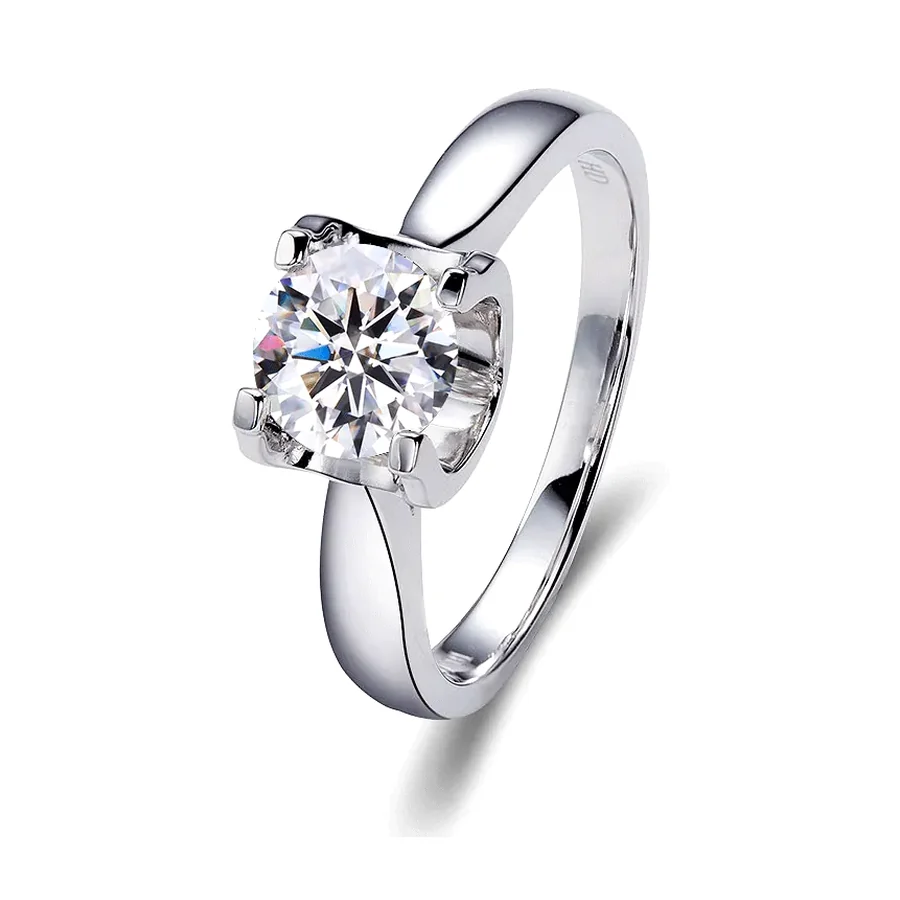
| 1.00 ct | 6.5 mm | The reference size |
| 1.50 ct | 7.4 mm | Noticeably larger without looking costume |
| 2.00 ct | 8.1 mm | Statement; consider a lower head |
| 3.00 ct | 9.3 mm | Large; band width must increase to balance |
Oval
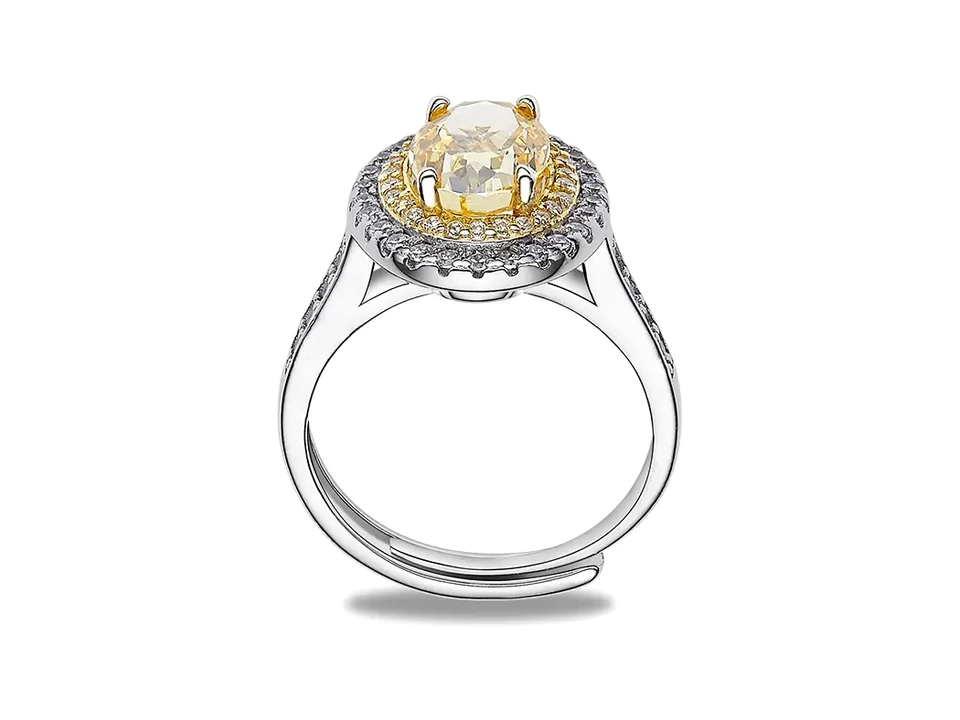
Oval stones are measured length × width. A 1 ct oval is roughly 7.7 × 5.7 mm — it looks bigger than a 1 ct round because the surface area is larger, even though the weight is the same. Ratios between 1.35 and 1.45 look classic; above 1.5 the stone reads narrow.
Pear
A 1 ct pear is about 8.5 × 5.5 mm. Pears face up large because of the point. Watch the bow-tie — a dark band across the widest part — which is most visible in stones with a shallow pavilion.
Emerald and Asscher
Step cuts are deeper for their width, so a 1 ct emerald is about 6.5 × 5 mm — visually smaller than a round of the same weight. This surprises people. If size matters, go up in carat for step cuts.
Cushion
Cushions vary from square to elongated. A 1 ct cushion is roughly 6 × 5.5 mm, but length-to-width ratio matters more than the average. Ask for the actual dimensions of the specific stone.
Why "spread" matters
Spread is how large a stone faces up relative to its weight. A shallow stone has a larger spread and can look bigger for the same carat — at the cost of light return. A deep stone looks smaller but can be better cut. This is why buying by carat alone is a mistake; buy by millimeter plus cut quality.
Matching to a hand
As a rough rule: a stone under 5 mm reads as a band accent; 5–6.5 mm reads as an engagement ring on most hands; 7–8 mm is generous; above 8.5 mm the ring becomes a statement piece and the band needs to be at least 2.2 mm to look balanced.